Pavla Kaňková
+420 771 297 711




17. 12. 2025
Employee motivation, talent retention, and effective recruitment rank among the most pressing topics in both Czech and global HR, as Marta Fabiánová notes in her interview with Tomáš Pospíchal from HR News. Below, we bring you a summary highlighting the key points from the interview, followed by the full interview transcript.
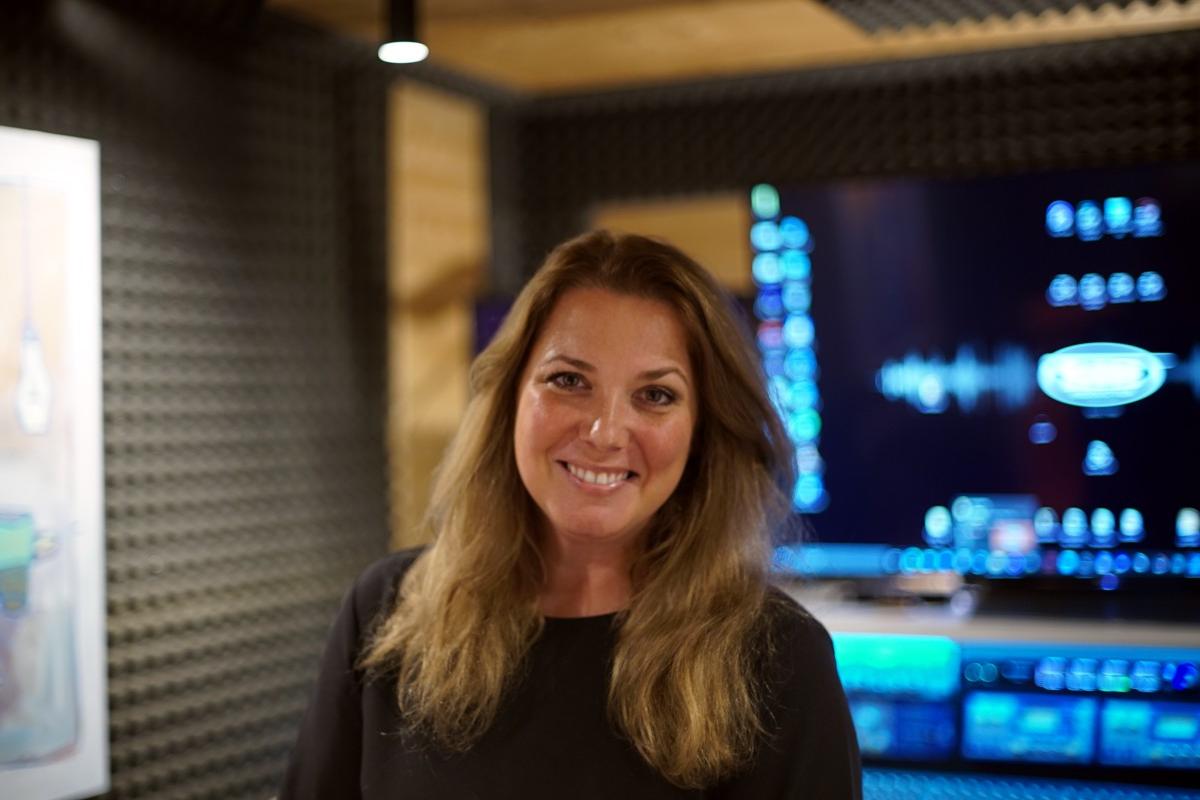
“Already in high school, sociology caught my interest. After university, I joined TCC, and today I’m part of TCC online,” recalls Marta Fabiánová, reflecting on the beginnings of her career. “I like to say our company is psycho–socio–technological—we work with data, develop tools for work psychodiagnostics, and create feedback tools. We help clients turn often abstract, intuitive impressions into concrete numbers that make decision-making easier.”
In recent years, employee retention has dominated HR discussions. According to a survey by Gallagher, more than two-thirds of HR professionals plan to focus primarily on retaining talent by 2026. “It’s not just about finding new employees—it’s mainly about keeping them. Unemployment is low, demographic trends indicate that candidates will be in short supply rather than surplus, and retention therefore remains a key topic.”
This issue is closely linked to generational diversity. “Companies are dealing with the differing expectations of Generation Z and employees aged 50+. And it’s certainly not just a media topic—it’s a reality companies truly face. Data show that younger and older employees are motivated by different things, and it’s up to managers to make the most of this diversity,” explains Marta Fabiánová.
According to her, the key factor behind employee satisfaction and loyalty is the work itself. “If people enjoy what they do, they’re far more likely to stay with the company. We see it not only in the data, but also in practice—an employee who feels fulfilled by their work is willing to go the extra mile, sometimes even on weekends.” The psychodiagnostics offered by TCC online help identify the conditions under which an employee will be productive and satisfied. “Personality plays a role, but just as important is the environment people work in. A sense of care and respect from the company increases the likelihood that employees will stay.”
Marta Fabiánová also highlights the importance of leadership and employees’ relationship with top management. “Even when leadership feels distant, there are ways to remain transparent and authentic. When that works, employee loyalty grows. Survey data show that employees tend to be most satisfied with their direct managers—and less so with top management.”
TCC online works with companies of all sizes, from small teams to corporations with thousands of employees. “Tools such as employee surveys or psychodiagnostics make sense even for small businesses. For medium-sized companies and above, their implementation is almost essential, because without data, it’s impossible to understand what’s really happening in the organization. The best approach is to combine data with conversations with people,” explains Marta Fabiánová.
Selection and recruitment processes today are increasingly supported by technology and artificial intelligence. “In hiring, psychodiagnostics help filter candidates based on their aptitude, abilities, and personality fit with the company culture. AI then helps us process large volumes of data—for example, in situations where hundreds of CVs need to be reviewed. Candidates also often prefer an AI interview, as they tend to perceive the process as fairer,” she adds.
For 2026, TCC online is developing a new tool, currently working under the provisional name “reliability test,” designed to help predict whether a candidate will regularly show up for work and fulfill their responsibilities. “We’re looking for companies willing to join the pilot. We want to verify whether the test can validly predict employee behavior,” says M. Fabiánová. Alongside this, TCC online continues to upgrade its existing tools and adapt them to new technologies.
According to Marta Fabiánová, the main task for HR and management is clear: understand people, use data wisely, and create an environment where employees enjoy their work and feel motivated. “If you have satisfied and engaged employees, the company prospers. That’s a fundamental rule that will never lose its relevance,” she concludes.
Full Interview Transcript
Tomáš Pospíchal (HR News): Our guest today is Marta Fabiánová, Managing Director at TCC online. We’ll be talking about employee motivation and the modern tools that can help companies with recruitment and people development.
There’s a lot happening in HR right now. If you had to boil it down to a few key points—here at the end of 2025—which trends do you see as the most influential today?
Marta Fabiánová (TCC online): We regularly attend the HRko conference, where a large HR and People & Culture community gathers. It’s always clear that everyone focuses on something different—some deal with more “hard” topics, such as compensation or organizational changes, while others concentrate on adapting to new technologies.
Yet, according to data from Gallagher’s global survey, conducted across 130 countries, most HR professionals—specifically, 66% of HR executives—say that employee retention will remain their top priority next year. That continues to be the number-one issue: not only finding employees, but above all keeping them. Unemployment is low, and demographic trends clearly show that the labor market won’t have an oversupply of candidates. Retention, therefore, remains HR’s key priority going forward.
TP: You mentioned demographics, which have been a major talking point lately. Companies everywhere are dealing with Generation Z, employees 50+, and similar groups. In your view, is this a topic that’s mainly amplified by the media, or is it something that genuinely resonates within companies and the projects you work on?
MF: In fact, both are true. As you said, everyone is talking about it, so it clearly resonates—and not just on the surface. Companies really are dealing with these issues. There are suddenly fewer young people, and their expectations have shifted significantly because they’re entering working life in a completely different context.
Today, the topic simply gets more attention because we frame it in an attractive way—the “generational alphabet”—which is easy to grasp and visually engaging. It makes the topic easy to write and talk about, but it also tempts us to label entire generations. That’s natural, too—people tend to simplify complex phenomena.
The challenge for managers is learning how to work with this diversity within teams. It’s not only about differences between men and women, but also about age, generational perspectives, cultures, and nationalities. Just yesterday, for example, I visited a company with 40 nationalities among roughly 800 employees. And that’s the real challenge—learning to harness the diversity that is an inherent part of today’s working world.
TP: What do you see as the key factors that influence employee retention—or, on the other hand, turnover? Which elements matter the most?
MF: We wanted to measure this so it wouldn’t be based only on assumptions—because, of course, everyone has their own opinion. And naturally, if you ask people from different companies, you’ll get different answers.
But when we look at data from employee surveys, we’re interested not only in satisfaction levels but also attitudes—for example, how loyal employees feel toward their company or how likely they are to leave.
What comes through very clearly is that loyalty follows certain patterns. We even examined whether loyalty can be predicted during hiring based on personality—for instance, whether extroverts are more loyal than introverts. It turned out these effects are very small. You can’t say that one personality type is inherently more loyal than another.
The key factors lie elsewhere. The single most important one is whether people enjoy their work. If they answer “yes,” the likelihood that they stay, recommend the company, become its ambassadors, and turn down other offers is significantly higher.
Put simply: if I enjoy my work, the chance that I stay is up to 60% higher. And that’s crucial. We hear this at conferences, in interviews, and in conversations with clients. When people enjoy what they do, they’re willing to go the extra mile—sometimes even on weekends or in the evenings. That doesn’t mean this should be the standard, but it shows that employees in such situations don’t leave even when they receive a comparable or slightly better offer elsewhere.
So if I enjoy my work and feel that what I do is meaningful, the likelihood that I stay is very high. And it’s up to leaders to create an environment where that’s possible.
TP: What does it actually mean when people say they “enjoy their work”? That can be defined in many different ways.
MF: That’s true. It’s a combination of the endless “nature versus nurture” question, meaning our innate traits and the environment we operate in. One aspect is whether the work itself fits me. For one person, recording a podcast might be a huge source of stress and something they would never want to do. For someone else, it’s a dream job—they could do it from morning till night and feel lucky to be paid for it.
So personality plays a key role in whether we enjoy our work—it has to match our natural tendencies, dispositions, and aptitudes. This is exactly where work psychodiagnostics is incredibly helpful. It can indicate what type of work suits us more and what suits us less. It can also show the degree to which our personality aligns with a company’s culture.
Because the same job—say, a marketer—can look completely different in different companies. In one organization, it may be a traditional environment with clear templates from the parent company, supplier coordination, and an emphasis on structure and precision. In another, it might be a dynamic setting where new ideas and innovations are constantly being created. And each of those contexts requires a different mindset and different strengths.
Psychodiagnostics helps people understand where they will feel comfortable and where they’ll be able to fully use their potential. So “nature” largely determines whether we’ll enjoy our work, whether it simply fits. But the other side is “nurture”: the environment, which is absolutely crucial. We can see this in the data from employee surveys and from exit interviews as well—what really matters is how the company treats its people.
Two factors repeatedly show up in the data. The first is the sense of care from the company. When people feel the company genuinely cares about them, the likelihood that things “click” and that they won’t consider leaving is much higher. This doesn’t mean the company should make employees feel pampered, add more perks, massages, or take care of them in a parental way.
It’s more about employees feeling respected, knowing their opinions matter, and not feeling like just a number. A partnership-based approach and transparency are key here.
The second factor concerns how people perceive their leaders. Leaders can sometimes seem very distant, positioned high up, and for employees, they’re almost like Mrs. Columbo—someone you read about in the company magazine or see maybe once a year.
TP: I’ve always had the feeling—if I may jump in—that the word leadership evokes someone sitting high up, almost sealed off from everyone else, or—to exaggerate a bit—on the very top floor where you have no chance of ever reaching them. But in reality, that’s not how it is at all, is it?
MF: It depends on the situation. It’s naturally easier in smaller companies, where people are more visible—you can actually talk to them, you know where they went on holiday—the connection simply forms much faster. This also makes it easier to communicate how leaders see the company’s future and where they want to take it.
But as the company grows, things get more complicated. If an organization operates across several continents or countries, it’s obviously more challenging. Even in the Czech context, larger companies with top management overseeing, say, three thousand employees simply cannot expect daily face-to-face contact.
Still, there are many ways, rituals, and tools to remain transparent, clear, credible, and – at the same time – authentic in your relationship with people. When leaders manage to do this, employees are much more likely to stay loyal.
TP: Marta, maybe a slight detour—who is a typical client of TCC online? There’s a common stereotype that employee surveys are useful only for large corporations, where they’re part of the organizational handbook. Is that true, or do you also work with smaller companies and other types of clients?
MF: I like to say that for us, a client can be anyone—even someone who has just one employee. Or even themselves, because tools like psychodiagnostics help you better understand your own aptitudes, what suits you, and what might sometimes hold you back. So, it makes sense even from a single person upward.
But if we speak specifically about surveys, for large companies, they’re an absolute necessity. Without data, it’s practically impossible to understand what’s going on inside the organization. Sometimes we hear the opinion that you just need to talk to people and surveys are unnecessary. But we always say these two things don’t exclude each other—ideally, you should do both.
We recommend surveys for medium-sized companies. But we also work with smaller clients—we’ve run surveys for organizations with around 20 people. After all, our own team has about 13–14 people, and we run surveys ourselves. For teams of 20, 30, or 50 employees, these tools already work very well. For mid-sized and large organizations, however, employee surveys should be a standard practice—and those make up the majority of our clients.
TP: How often should a survey like this be carried out? I assume it also depends on the type of survey, right?
MF: Exactly. There’s no single universal formula for how often a survey should be conducted. It depends on the specific project and the company’s needs. If you want to track how people are feeling on an ongoing basis, you can run surveys monthly or quarterly. We tend to lean toward the quarterly option, so managers have enough time to react to the data and implement measures.
Monthly surveys can be useful for quick check-ins—for example, to see whether a new initiative has resonated in employees’ attitudes or satisfaction. The key is that the survey frequency must match the management’s ability to process the data and respond effectively. If managers receive the results after a month or two, it doesn’t make sense to expect another survey in three months.
TP: Before we started our interview, you used the term “the loyalty gene,” which I initially misunderstood—I thought we were talking about a new generation of people, since there are so many of those labels these days. Then I realized you meant the “gene” of a person—an employee—who is loyal. What does this concept mean to you as a sociologist and to TCC online?
MF: We’re trying to determine whether it’s possible to predict, based on data, whether someone will become a loyal employee. Clients ask about this quite often—especially when a hire doesn’t work out, and a new employee leaves quickly, even though the company has a strong culture and invested in proper onboarding. In these cases, it’s not the usual problems—it’s not that no one paid attention to the new hire, or that they didn’t fit the team, or that the job turned out to be something different than what was promised.
Our clients are highly experienced HR and People & Culture professionals—very little surprises them. And yet, sometimes during hiring, they still end up saying that, repeatedly, “something just didn’t click.” And that’s risky, because when a hire fails, it hurts. There aren’t many candidates on the market, turnover is low—around 15%—and unemployment is roughly 3%. So there isn’t much movement, but every departure can cost a company up to twice the employee’s annual salary in indirect costs.
The worst is when a senior hire fails. I recently came from a meeting with a company where a senior managerial hire didn’t work out—and it eventually triggered the departure of several other talented people. That domino effect is incredibly painful—financially, in terms of staffing, and for the overall atmosphere.
There is no universal “loyalty gene.” The job, the expectations, and the company culture all have to align with the individual. Both someone’s innate predispositions and their environment play a role. That’s why having well-designed and sophisticated hiring tools really pays off.
TP: Isn’t there a risk that psychodiagnostics might discourage some candidates from applying for a role? Or am I oversimplifying it?
MF: In practice, it doesn’t discourage candidates. And if it does, it’s usually those who wouldn’t be willing to put much effort into the hiring process anyway. Most candidates today fully accept that recruitment has multiple rounds and that tools like these are part of it. If a candidate believes they’re a good fit for the role—or wants to confirm that—their willingness to complete such tools often increases, especially if they know they’ll receive the outputs at the end, which can be interesting for them in their own right.
TP: Do companies usually have a clear idea of their ideal candidate and the profile they’re looking for? And isn’t that sometimes at odds with what the talent market actually offers today?
MF: It can be. Before you start looking for a specific person, you need to clearly define who you’re actually looking for. Everyone knows the situation—you ask managers who they need, and today we often hear that they’re looking for a “unicorn.” They’ll say the person has to be structured, thorough, detail-oriented, yet also flexible, proactive, a good listener—essentially, they should have absolutely everything.
When we test existing employees or candidates, it becomes clear who actually performs well. Some of them are the kind of role models you’d want to “clone.” We then look for patterns—recurring characteristics that can indicate who is likely to succeed in the role. Not all traits ever align in one perfect point, but there is usually a “red thread” that shows who will thrive in the position and for whom the role is essentially tailor-made.
TP: What specific factors can affect someone’s success in a given role?
MF: Let’s imagine a scale—for example, caution versus opportunity-orientation. The truth is, you can absolutely see opportunities and still be cautious. Both are completely legitimate tendencies. Sometimes it’s useful to be more cautious, at other times it’s better to focus on opportunities.
When we mapped a specific sales team and looked at where the most successful salespeople scored, this particular scale showed that they tended to be more opportunity-oriented. These individuals don’t get discouraged by obstacles; they don’t limit themselves by thinking something won’t work or that they don’t know everything—they simply push forward. And if something doesn’t work the first time, they try again. They’re driven more by opportunities than by barriers.
If nine out of ten people fail at something, they’re the ones who won’t be discouraged. And that kind of personality setup gives them a huge “superpower” for succeeding in that role.
It’s similar with other scales—for example, activity versus stability. Those who lean more toward activity often perform far better in roles that require proactivity, because they don’t wait for instructions like “try reaching out to that candidate” or “go to an event and see if something comes up.”
And it can also show whether someone is more focused on the big picture or on detail, whether they make decisions autonomously or prefer collaboration, and so on.
TP: Where does your role in the hiring process begin—and where does it end?
MF: We can support clients very effectively already in the early stages of selecting candidates—sometimes even at the very start of the entire process. Many companies include psychodiagnostics in the first round because they want to screen candidates early and keep their options open. They don’t want to miss out on someone just because the person doesn’t have fully relevant experience. What they care about most are their natural strengths—previous experience is often irrelevant; the rest can be learned.
More often, psychodiagnostics is used later in the hiring process, when the decision is being made between candidates with relevant backgrounds—for example, in more specialized roles—and it helps with the final selection.
One of the great strengths of psychodiagnostics is that it provides valuable insights for adaptation and onboarding. A manager receives a report with practical tips: what this particular person needs to learn quickly, whether they require collaboration or prefer to study materials independently, and so on. Psychodiagnostics is also useful after hiring, for example, in employee development, because it offers guidance on how to work with a specific individual in the most effective way.
TP: Where does it make sense to use psychodiagnostics—and where does it not?
MF: In most situations, psychodiagnostics can help—but it really comes down to the purpose. For example, if you’re hiring a data analyst or another highly specialized role where the focus is on a narrow set of skills, you’re primarily looking at their cognitive abilities. In that case, personality factors aren’t as crucial.
But there are situations where you might say, “Yes, this person is an excellent expert, but we also need them to fit into our culture.” And if your organizational environment is very dynamic, it makes perfect sense for the candidate to go through psychodiagnostics as well.
In short, it always depends on what exactly you need. If the goal is simply to verify technical expertise, psychodiagnostics won’t add much value. But if you want to understand whether someone will fit into the team and align with the company culture, then it certainly has its place.
TP: Let me return to employee surveys for a moment: you provide the data, and HR works with it—but where does management come in, given that so much of it ultimately depends on them?
MF: Management is directly involved. I often meet with the executive board to go through the results, because that discussion is usually crucial. It’s not just an HR or People & Culture project that gets handled somewhere locally—on the contrary, it plays a key role for the entire company.
TP: Isn’t the executive board a bit too distant? And doesn’t most of this actually depend on middle management?
MF: It may be more distant from day-to-day life in the company, but the core of the problem often becomes visible in the data, and the executive board needs to see that.
In my experience, boards are made up of extremely skilled and intelligent people with strong analytical abilities. That’s why I always approach them with respect—I know the information I bring must be grounded in data. These leaders can read what the data is telling them very quickly, and they’re often able to detach from any uncomfortable feelings. When they see that the feedback toward top management is critical, they’re able to identify it clearly and process it constructively.
In the data, we very often see appreciation for direct supervisors and, conversely, a degree of criticism toward top management. That’s common—direct supervisors tend to be evaluated very positively because they represent one of the basic “hygiene factors.” If this fundamental relationship didn’t work, people would likely leave the company.
Across years and across industries, the highest satisfaction tends to be with direct supervisors and with the working environment—working hours, tools, and resources, the fundamental expectations. Satisfaction is typically lower when it comes to top management, the board, and senior leaders. What we often see there is a more neutral stance—employees aren’t sure, or they don’t have enough information to give a clear answer. That doesn’t necessarily mean they’re dissatisfied; they simply lack the insight to evaluate leadership properly.
However, if the gap in perception is enormous—almost an admiration for direct supervisors and, by contrast, strong criticism of top leadership—we start asking how communication and cooperation work across management levels. Because sometimes that’s where the real issue lies: leaders believe they’re clearly communicating strategy and changes, they’re willing to repeat and explain why things are happening—but the information simply doesn’t make it all the way down.
TP: How do you work with the data to make sure management receives clear and useful information for decision-making?
MF: Numbers generally work extremely well with management. Talking to people, running focus groups, and summarizing the findings is certainly useful—but only up to a certain company size. In larger organizations, you need concrete data that allows you to analyze the situation across different demographic groups.
Organizational structure is typically key, but generational distribution often plays an essential role as well—it can reveal whether certain groups of employees are giving different types of feedback. Seniority matters too, meaning how long employees have been with the company.
The larger the company, the more combinations and data cuts emerge—and the ability to analyze the data from various angles becomes crucial. We help top management understand the insights by presenting them, for example, through heatmaps that provide a quick, global overview of what’s happening in the company.
We can generate any number of PDF reports that can be shared and presented immediately. But when management wants to see the organization in its full complexity, we prepare the data in the form of a presentation enriched with interpretation, recommendations, and analytical reasoning. In recent years, this has increasingly involved support from artificial intelligence, which can process enormous volumes of text-based data.
TP: How should people who are just beginning to work with HR data—for example, when running their first employee survey—approach it? And what numbers should they set as their goals?
MF: We’ve discussed this with seasoned HR professionals from different companies, and there are many ways to analyze data. But it’s helpful to choose a few key indicators—for example, turnover, the time it takes for a candidate to accept an offer (“time to yes”), or the number of candidates you consider before selecting the final hire.
More data offers more possibilities, but if profit or efficiency isn’t growing, the crucial step is deciding which numbers you actually want to track.
This is entirely in the hands of HR partners and People & Culture teams—they know exactly what needs to be monitored. Then comes the choice of the right tool to measure it. You can track process readiness, employee engagement, or satisfaction through whichever metric you choose. The most important thing at the start is to define clearly what you truly want to measure.
TP: How has TCC online had to adapt to the growing trend of using HR data in recent years?
MF: We embraced this trend from the very beginning, because creating data is essentially what we do. We keep pushing it further by translating even very “soft” aspects into clear numbers—something we’ve always succeeded at in psychodiagnostics.
We’re also evolving in how we work with clients by running analyses on real people—both successful and unsuccessful hires—and looking for evidence directly in the data. Those who match the optimal profile derived from psychodiagnostics generate up to double the revenue, which we’ve consistently demonstrated even with large partners, such as Allianz. That’s the unmistakable language of numbers—and this is exactly where adaptation is necessary, because in the end, clients need to understand why we do it and whether it delivers value. And when you see it can generate up to twice the output, that’s a very strong argument.
Recently, AI has become a major part of our processes. When we receive data from, say, three thousand employees, it’s practically impossible to analyze all of it manually. AI can quickly evaluate which topics are emerging, what the sentiment is—positive or negative—and whether any emotionally toned expressions appear. And it does this almost instantly.
TP: So does that mean artificial intelligence has become your new data analyst?
MF: In some ways, yes—but there’s an important caveat. Artificial intelligence is still far from perfect. If you simply “feed” it outputs from different rating scales, it can easily get lost. Take the classic 360° feedback as an example. You evaluate whether someone delivers on their promises, whether they’re trustworthy, persuasive, or able to argue well. The responses are given on a scale, so colleagues provide structured feedback.
But they can also indicate how important each question is to them. This means the person being evaluated might see that they have room to improve in a certain area, but for their colleagues, it’s not crucial. Meanwhile, in areas that matter most to the team—such as trustworthiness—they may receive very positive feedback.
This creates several layers of data: two scales, varying levels of importance, plus comments. And when all of that is sent to AI for processing, meanings can get mixed up or even reversed. At first glance, it may look impressive, but the results can become distorted. And this is exactly where the human data analyst remains irreplaceable—at least for now.
When we were developing a recruitment chatbot for UniCredit Bank—which we’re currently modernizing—we discovered something interesting. The chatbot doesn’t only ask practical questions; it also asks psychodiagnostic ones. And during the redesign, we noticed that while AI is excellent at responding to questions like “what motivates you” or “what do you enjoy,” it still struggles with logical tasks. We previously included simple verbal logic exercises in the chatbot, and those it managed reasonably well. But once the test became more complex or required genuine logical reasoning, the answers stopped making sense.
TP: It’s a language model.
MF: Yes—it’s a language model, and that’s exactly why it still struggles with more abstract tasks. A typical example would be visual or logical sequences where a person has to determine what comes next. AI often fails in these tests because it can’t “look up” the answer anywhere, nor can it truly understand the underlying concept. It may find something that looks similar, but it can’t transfer that experience to a new, unfamiliar case.
Sometimes it gets it right, sometimes it completely misses the point. It’s simply not perfect yet. But to be fair, neither is a human data analyst. The difference is that a human understands context, nuance, and the human factor, all of which remain far beyond the reach of artificial intelligence for now.
TP: If you were to advise your HR partners or clients on how they can use AI in their processes, where do you see the biggest opportunities?
MF: I’d actually refer to those more qualified in this area, because not only the Czech Association for Artificial Intelligence, but many other companies are actively working on how AI can be embedded into HR processes. It can be used in payroll systems, shift planning, or attendance systems.
But we also have a great example from recruitment. We collaborate with a company called Talentpilot, to whose solution we provide psychodiagnostics. They even have an AI recruiter named Alex, who can conduct interviews with candidates and process their psychodiagnostic results.
Let me give you a specific case—during a recruitment process for a bank, they received around two thousand CVs, which was highly unusual. They decided to try an AI-supported hiring process. What was interesting is that when candidates were asked whether they would prefer an AI recruiter or a human recruiter, 91% said they preferred AI because they believed it would be fairer and apply the same standard to everyone. They also spent twice as much time with the AI—roughly 20 minutes more than in a typical interview—which would be practically impossible for human recruiters with such a high volume of applicants.
AI adoption varies by age and by people’s attitudes toward technology. Among younger populations, the adoption tends to be more positive. AI can offer substantial support, but it still needs to be “fed” the right tasks—the human factor remains essential. Still, AI can take over interviewing a larger number of candidates, which allows human recruiters to focus their time on other priorities.
TP: What is TCC online working on for 2026? What do you have in the pipeline for your clients?
MF: We’re currently developing a method that, for now, has the working title “reliability test,” which will map work-related attitudes. It’s a response to the growing demand from clients who are looking for a tool that can predict, already during the hiring process, whether a candidate will actually start, show up consistently, and fulfill their responsibilities. We’re now in the pilot-testing phase and looking for clients who would be willing to join the project so we can measure its predictive validity—in other words, verify whether the test truly reflects real-world behavior. Those who participate in the pilot can use the tool free of charge for a limited period.
In addition to that, we continue upgrading and refreshing our existing tools, simply because they become outdated—and we have quite a few of them. We’re making sure they stay up to date and have all the necessary language versions.

18. 12. 2025
Meaningful Growth Thank you for creating an environment with us where care, development, and sustainability are not just words, but...
15. 12. 2025
You know the scenario: a candidate walks in with a perfect resumé, shines during the interview, but a few months later, you realize it...
© 2026 All rights reserved. TCC online s.r.o.
